NEXTBUD
MARTKET PLACE
ROLE
UX DESIGN
DURATION
5 MONTHS
TEAM
CEO DEMOLA
4 DESIGNERS
SKILLS
UX Design
Wireframing
Prototyping
about.
NextBud Marketplace is a cross-border e-commerce platform that empowers African entrepreneurs in the UK to connect with diasporic communities through curated goods. Originally designed to bridge Nigerian merchants with customers worldwide, the platform shifted focus to UK-based sellers to address logistics challenges while staying true to its mission:
supporting local African businesses and celebrating cultural identity through commerce.
As the UX designer on the team, I worked on designing the information architecture, product categorization, and key user flows—from browsing to checkout. I collaborated closely with the product manager and fellow designers to ensure the user experience was clear, intuitive, and scalable.
challenge.
Designing an e-commerce experience within an existing social platform came with unique constraints. The product needed to feel trustworthy and simple for users unfamiliar with online shopping—many of whom were first-time buyers or sellers. At the same time, it had to support complex flows like product discovery, vendor onboarding, secure payment, and real-time order tracking.
Additionally, because the platform pivoted from international to UK-focused logistics mid-project, many early design decisions had to be revisited. We had to rethink how to streamline the vendor experience, simplify product categorization, and reduce buyer hesitation around trust and delivery reliability—all without overwhelming users.
my role.
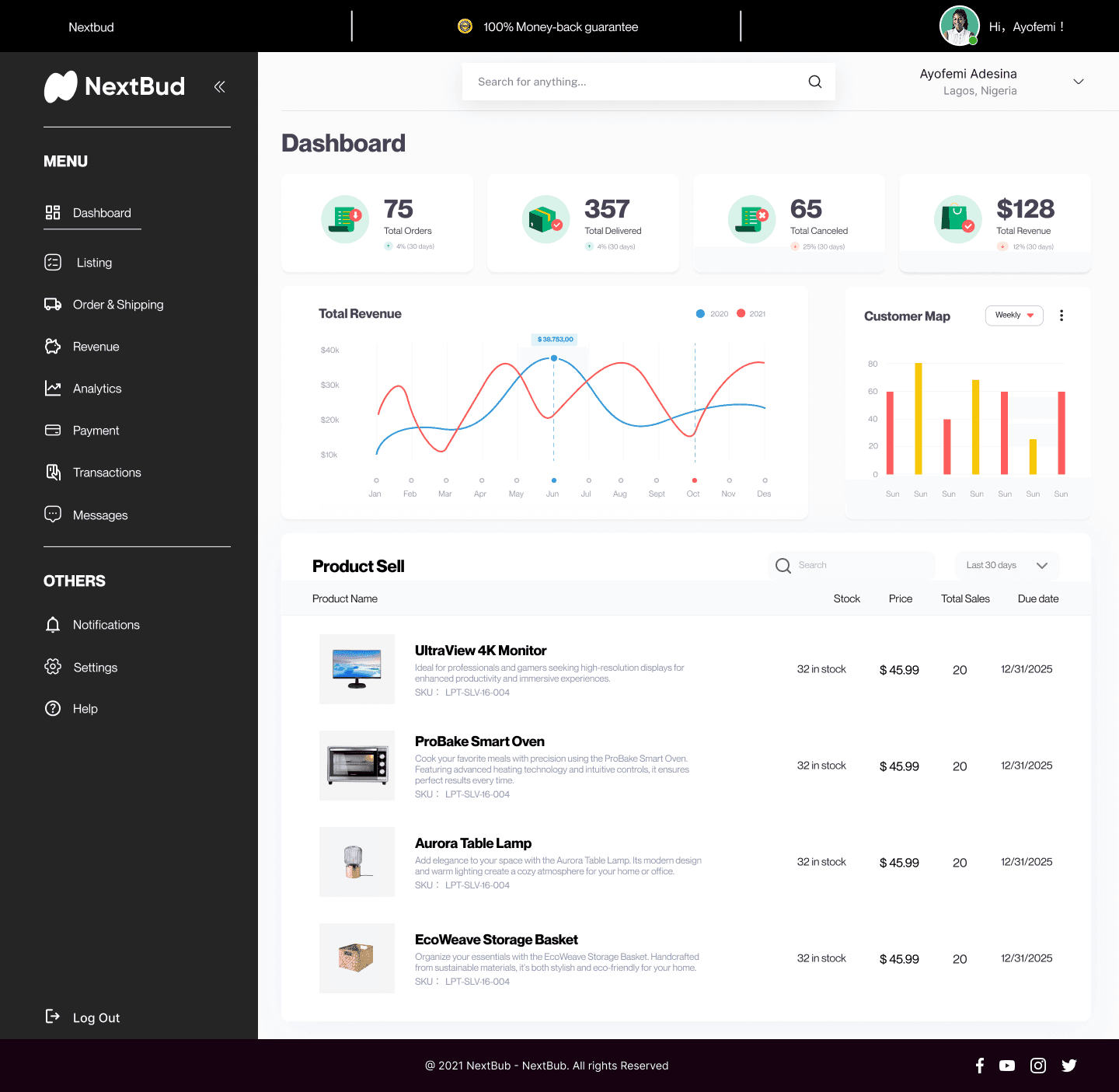
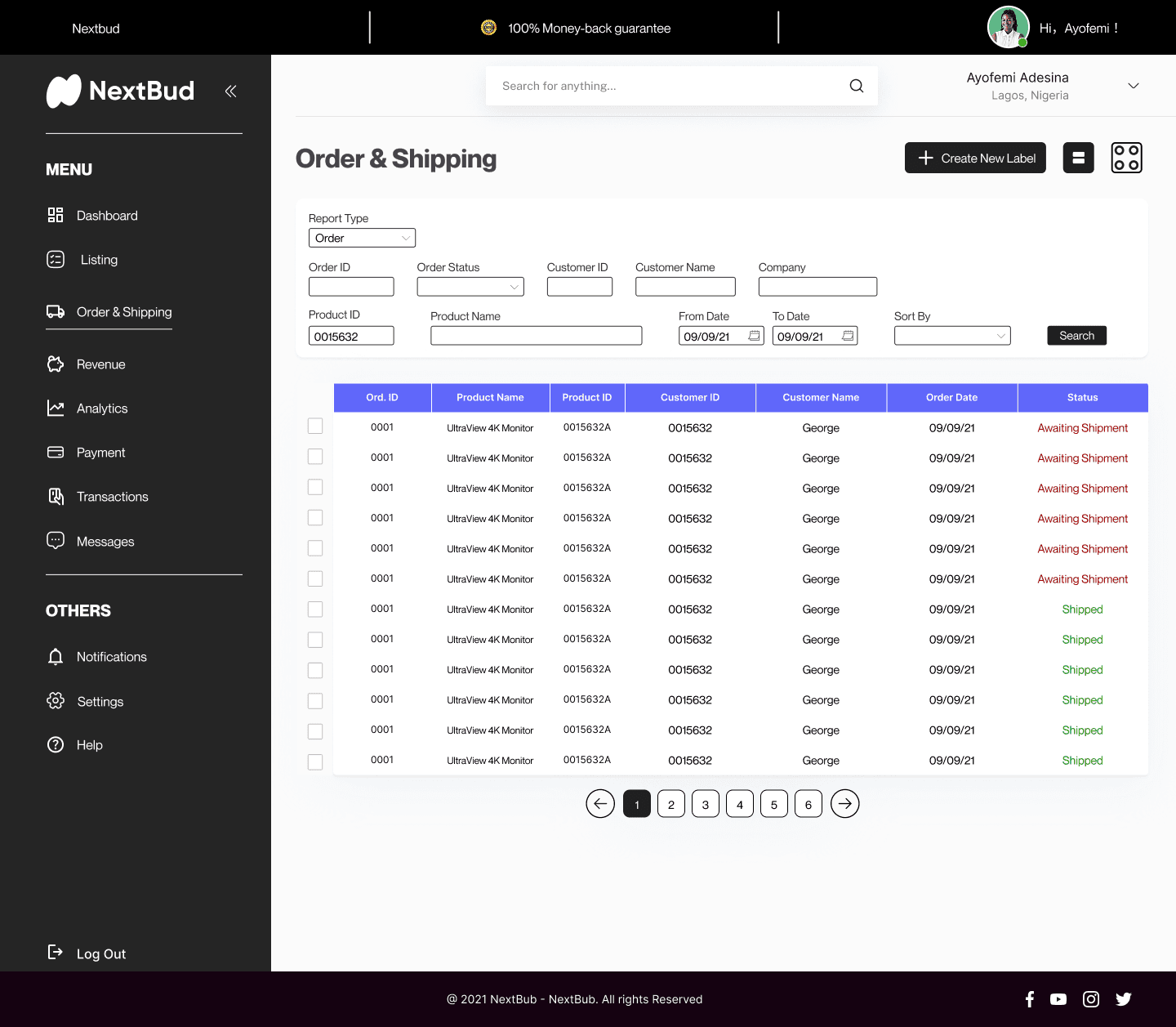
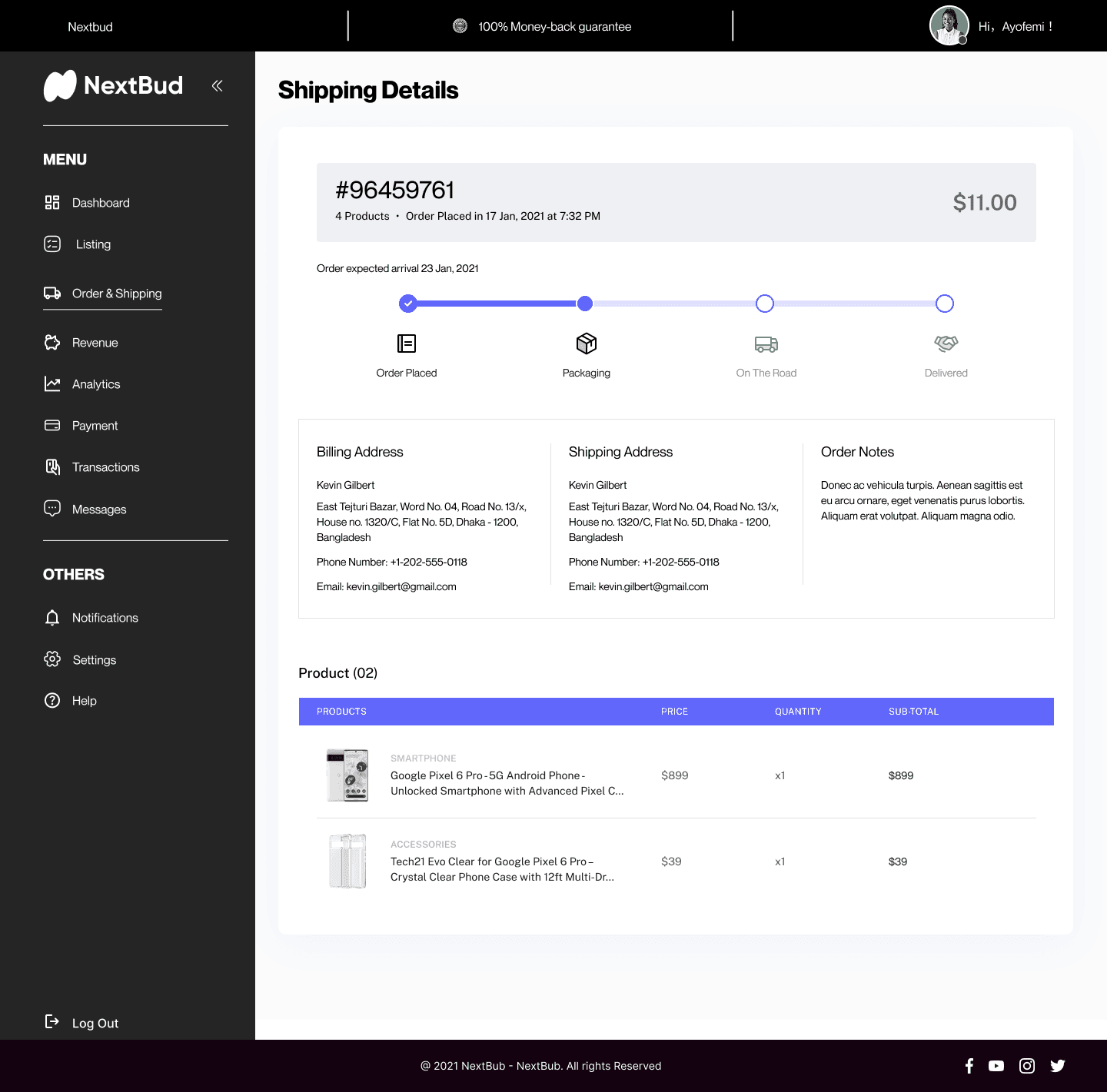
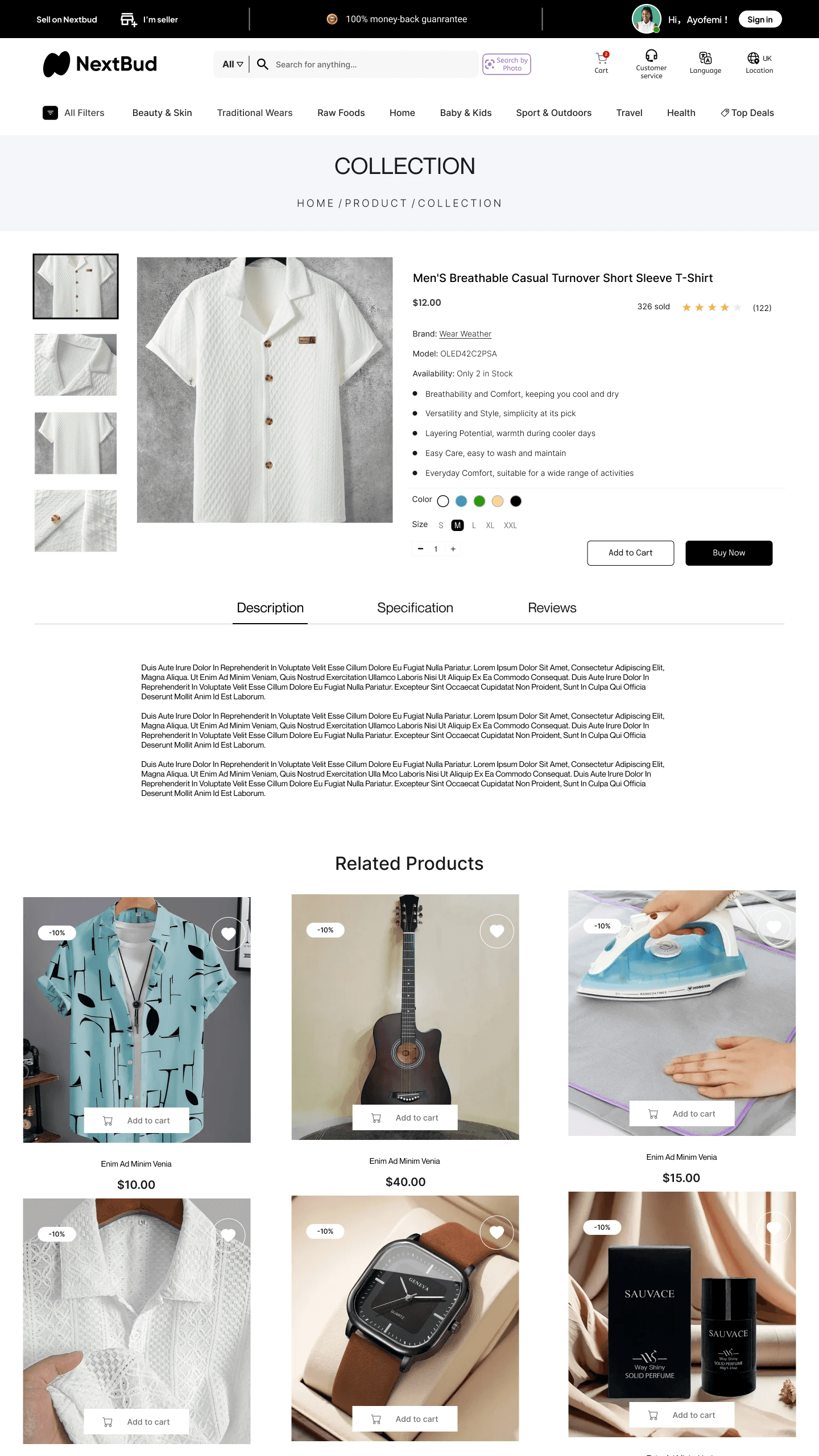
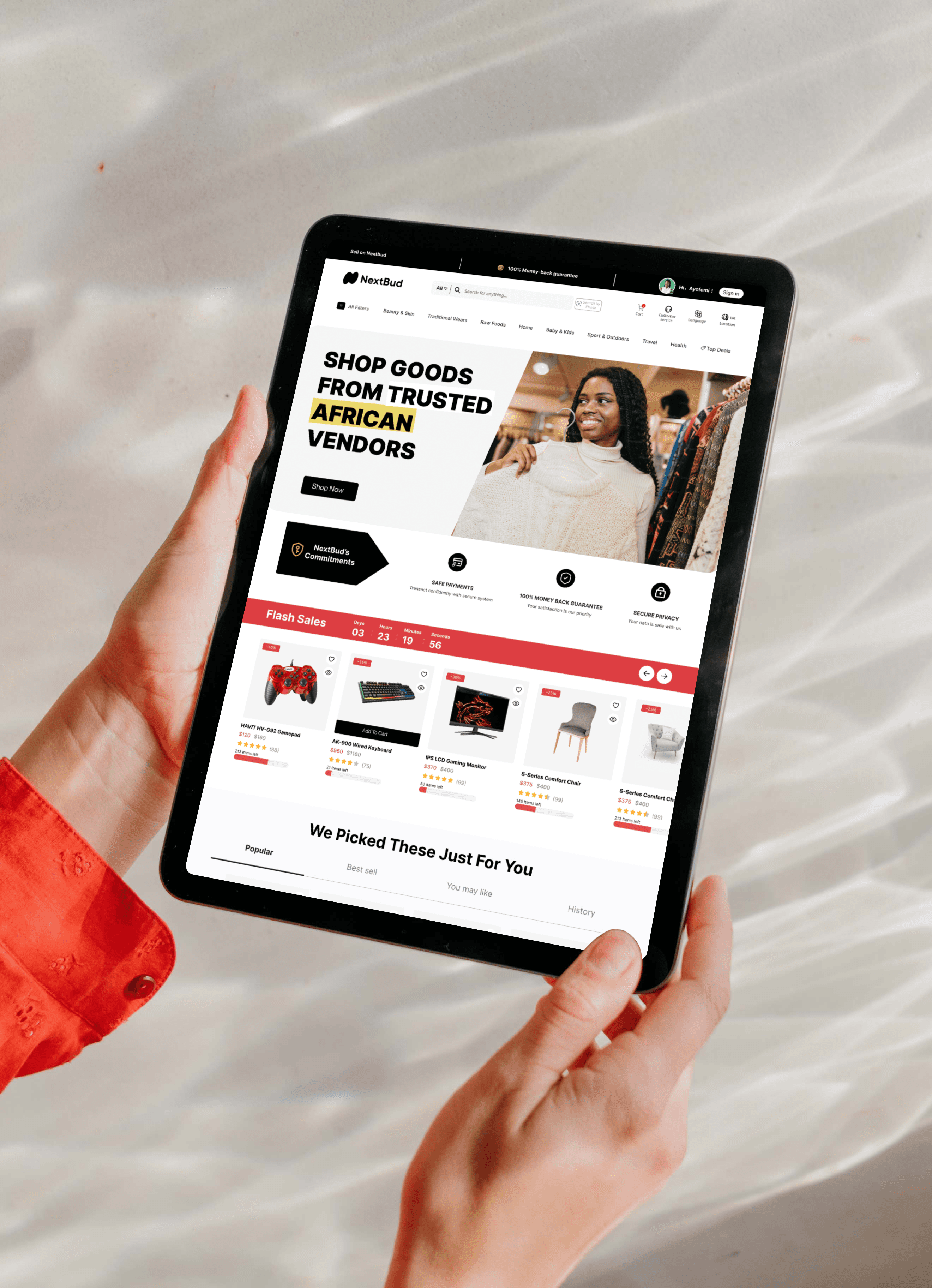
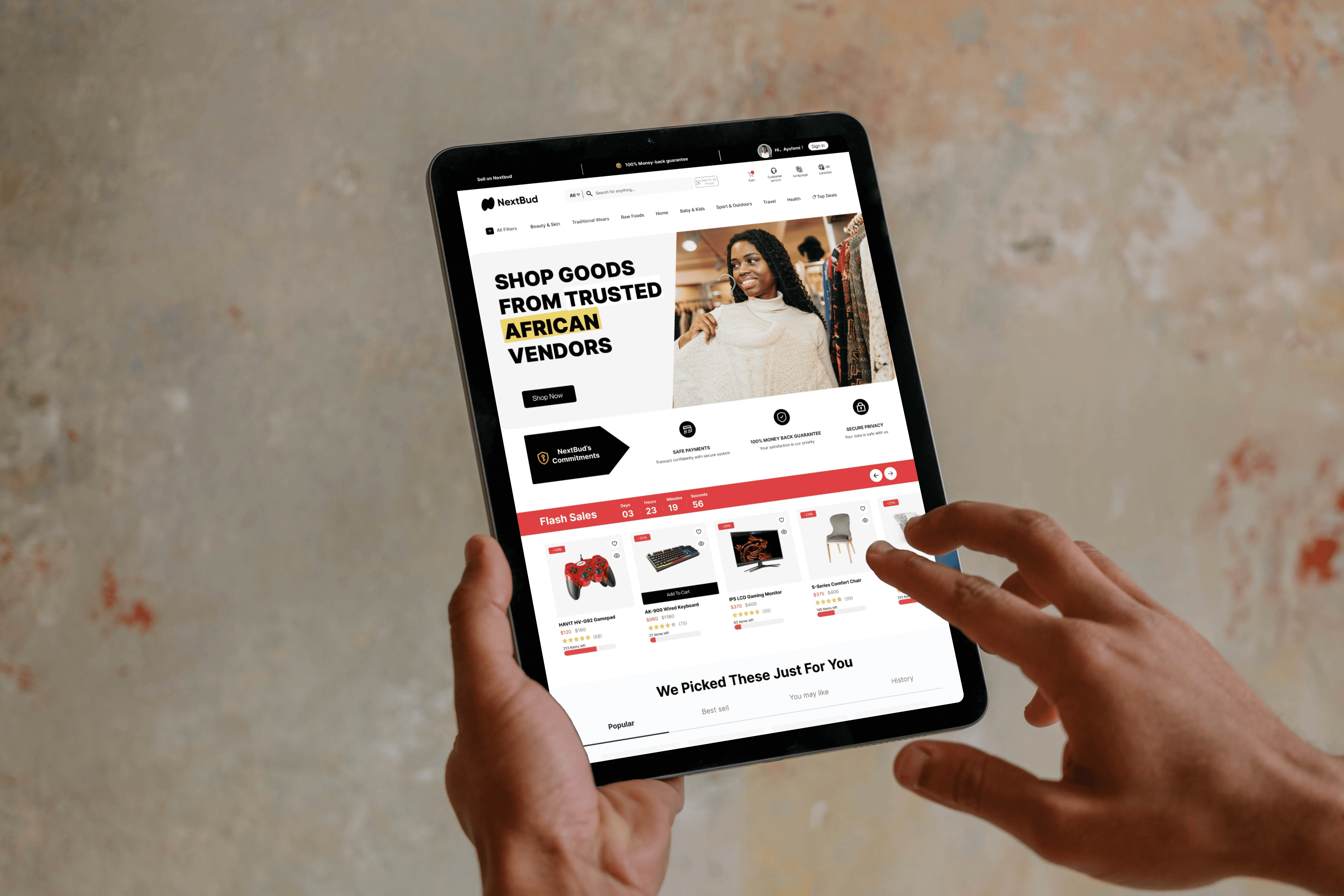
As the UX Designer on this project, I was responsible for leading the design of the marketplace experience from structure to interface. I worked closely with the product manager and another designer to define the information architecture, create buyer and seller flows, and design key pages such as the homepage, product listings, checkout, and vendor dashboard.
Key tasks I worked on included:
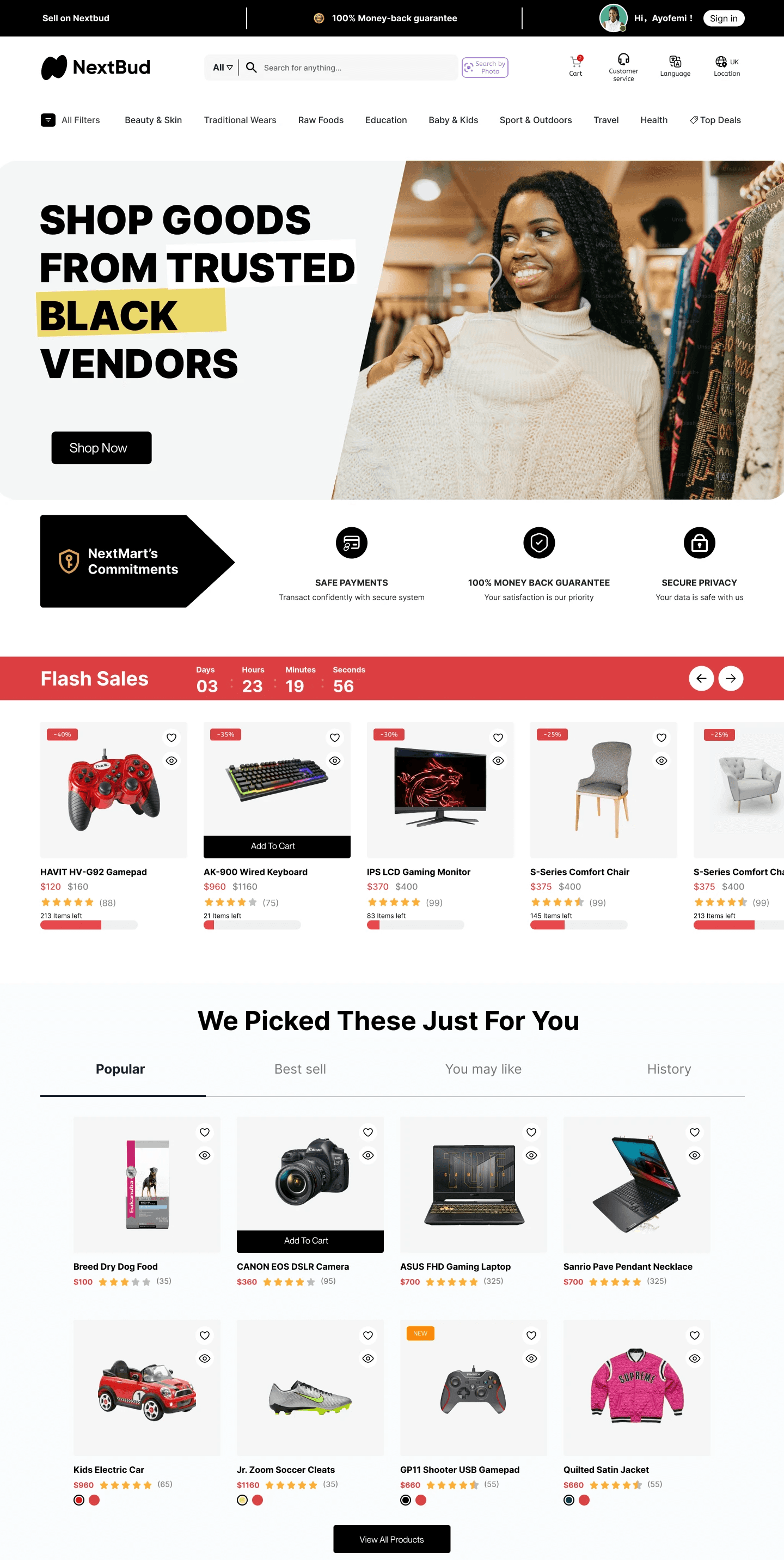
Designing the site architecture and product categories to simplify navigation and improve product discovery
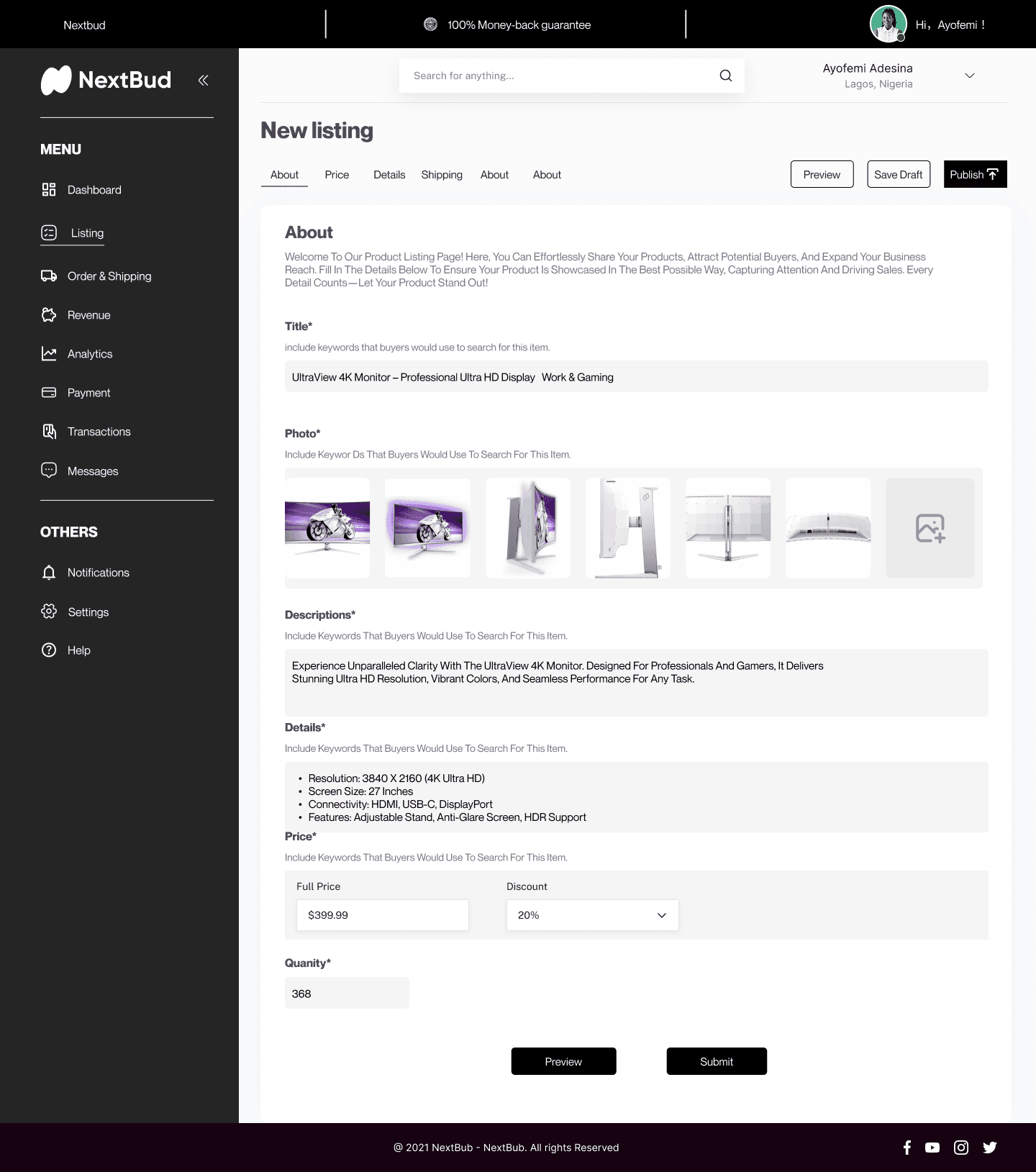
Creating end-to-end user flows for buyers (from product search to tracking) and sellers (from registration to product listing)
Wireframing key screens and planning how to surface trust signals (e.g. refund guarantees, verified badges)
Collaborating with the PM to align design decisions with changing logistics and business goals
To address the main challenges, I focused on reducing friction at key moments—like vendor onboarding and checkout—and making sure the platform clearly communicated safety, simplicity, and cultural relevance.
design.
“I don’t know if I can trust this seller.”
In many African regions, online shopping is still met with skepticism. Users are often reluctant to buy from unfamiliar vendors due to fear of scams, poor product quality, or never receiving their orders. These concerns are heightened by limited access to secure payment systems and unreliable logistics. As a result, building user trust was one of the most critical challenges we needed to solve.
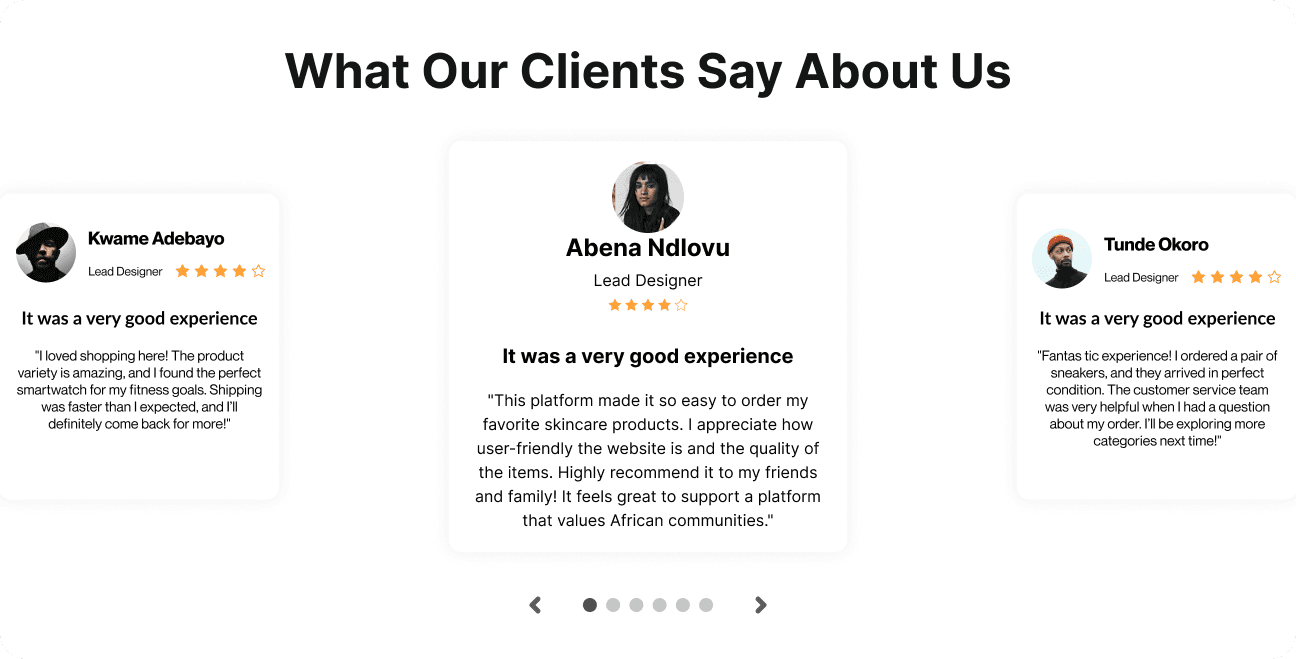

We introduced multiple trust-building features into the shopping experience:
Verified Seller Badges
100% Refund Guarantee Messaging
Escrow Payment System
Trust Messaging in UI
“I don’t know how to sell my products here.”
Many vendors on the platform were small business owners—often with limited experience using digital tools. For them, registering as a seller and uploading product listings could feel overwhelming, especially if the process was long, unclear, or filled with unfamiliar terms. Without proper guidance or simplification, we risked losing potential sellers before they ever listed a product.
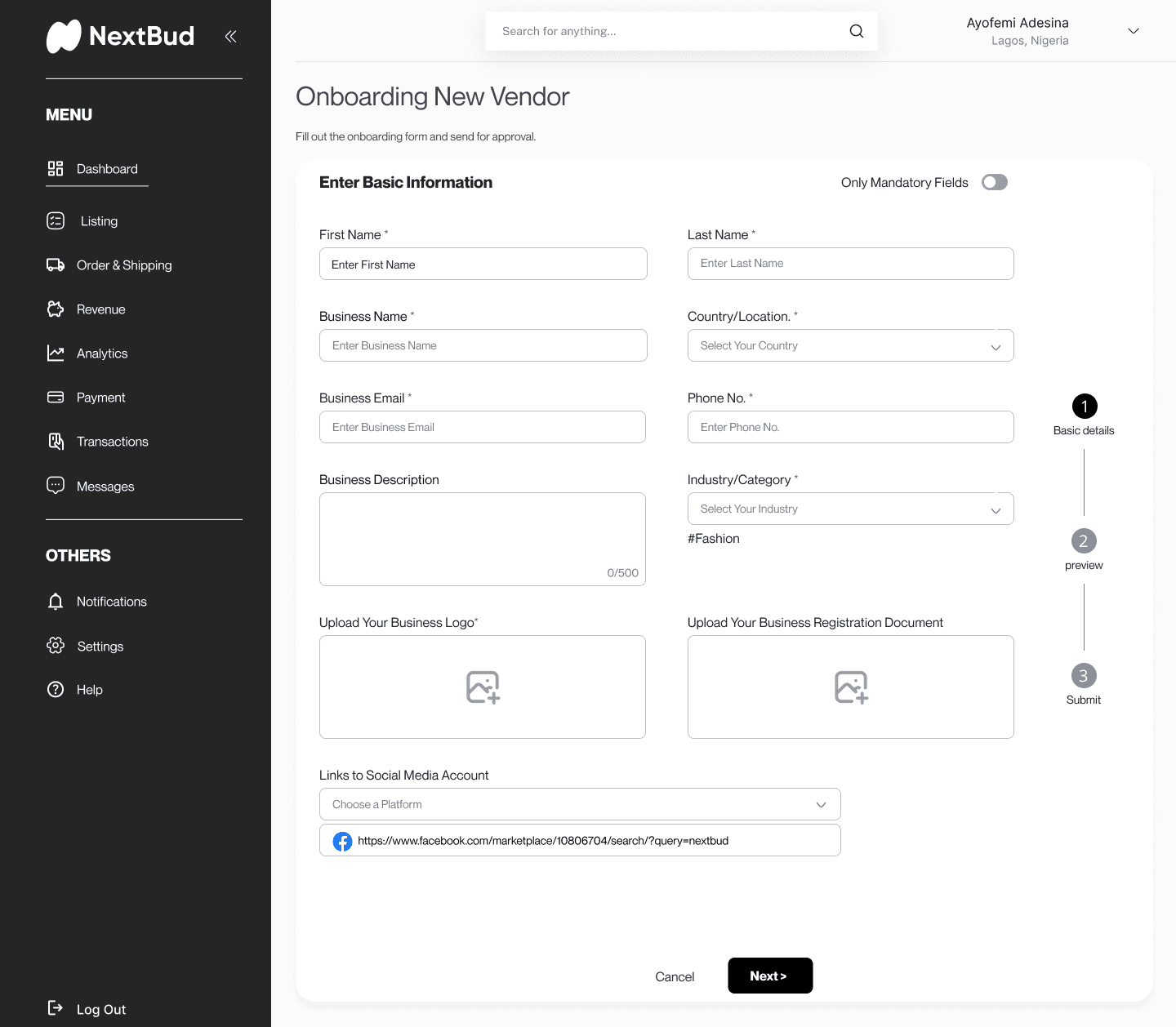
To support these vendors, we focused on making onboarding quick, guided, and low-friction:
Minimal Registration Barrier
Simple Onboarding Flow
.Predefined Product Categories
Bulk Upload as Future Option
Clear Feedback After Submission
These improvements were designed to remove technical friction and give sellers a sense of control and progress, even if they weren’t tech-savvy.
Many users—especially first-time buyers—struggled to navigate the marketplace due to unclear product categorization and a lack of filtering options. Without a clear taxonomy or search support, users often gave up before finding what they needed. This was especially frustrating for diaspora users who were looking for very specific items like traditional wear, African skincare, or regional food products.
“It’s hard to find what I’m looking for.”
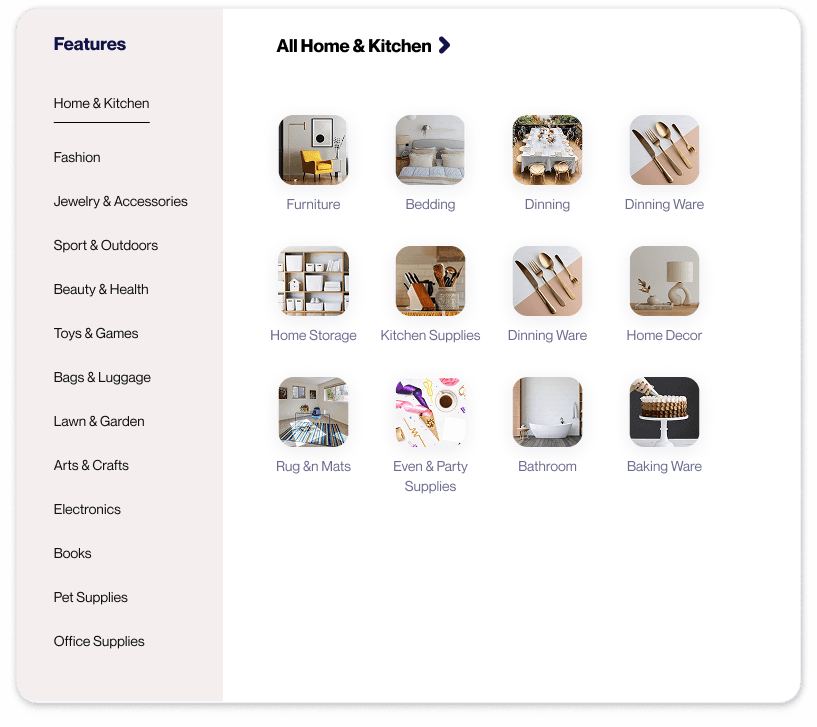
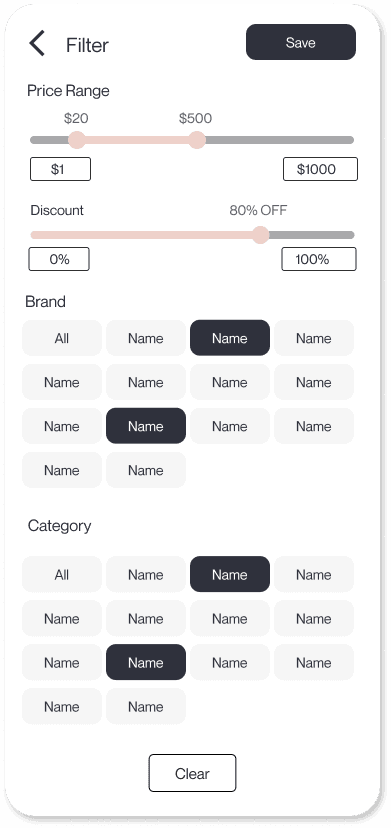
We focused on simplifying product discovery through structure, hierarchy, and personalization:
Clear Product Categorization
Homepage Featuring Popular CategoriesSearch & Filter Design
Personalized Recommendations (future scope)
Takeaways
What I learned
This project taught me how to design within business constraints and make decisions with incomplete information. I also gained experience simplifying workflows for non-tech users.
Impact or Next Steps
Given more time, I would run usability tests to validate our product discovery flow and explore how to personalize the buyer experience.
I prepared handoff documentation for developers and scoped ideas for future features like bulk product upload and buyer recommendations.